Understanding White Water Rafting Grades
The term white water refers to the foamy, aerated water created when a river’s gradient increases enough to disrupt smooth flow and generate turbulence. The bubbling water appears white in color, giving rise to the name “white water.” The term is also used more broadly to describe moving water that is rough, fast-flowing, or turbulent.
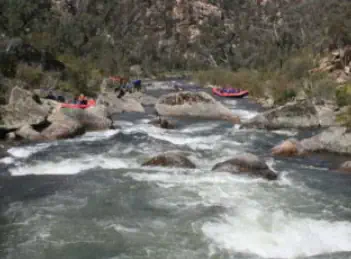
The most widely used classification system is the International Scale of River Difficulty, which grades rapids from Class I (easy) to Class VI (extremely difficult and dangerous). The grading reflects both the technical difficulty and the level of risk involved.
River grades are not fixed and can vary depending on water level, seasonal conditions, and river flow. During flood conditions, even normally easy rapids can become hazardous and unpredictable.
Class I – Easy
Small waves and minimal obstructions. Little or no maneuvering required.
Skill Level: None
Class II – Novice
Some rough water, small waves, rocks, and minor drops requiring basic maneuvering.
Skill Level: Basic paddling skills
Class III – Intermediate
Moderate whitewater, medium waves, and occasional drops. Rapids may require significant maneuvering and good boat control.
Skill Level: Experienced paddlers
Class IV – Advanced
Powerful rapids with large waves, rocks, and technical routes. Sharp, accurate maneuvers are often required.
Skill Level: Whitewater experience required
Class V – Expert
Continuous rapids, large waves, major obstacles, and potentially significant drops. Precision and advanced rescue skills are essential.
Skill Level: Advanced whitewater experience
Class VI – Extreme
Exceptionally dangerous rapids with severe hazards, powerful hydraulics, large drops, and potentially life-threatening consequences. These rapids are rarely attempted and are often considered unrunnable.
Skill Level: Expert only
What Is a Portage?
When a rapid is considered too dangerous, paddlers may choose to
portage it. A portage involves carrying the boat
and equipment around the hazard before re-entering the river below
the rapid.